




The Iranian crisis has long gone beyond domestic boundaries and become part of geopolitical processes, notes Sputnik Armenia columnist, analysing the events in the neighbouring country.
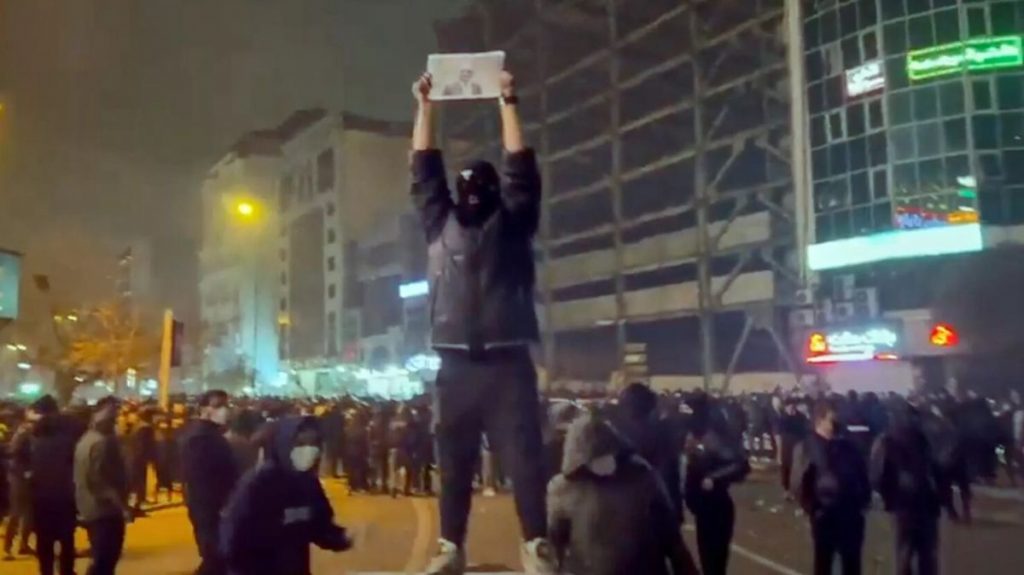
The protests in Iran are not just a mass demonstration of the Iranian people’s civic stance due to the deterioration of the socio-economic situation; the discontent of ordinary citizens has become the backdrop for more profound processes.
In reality, this is an attempt to dismantle one of the key states in the Eurasian space, whose existence has ensured strategic balance in the South Caucasus and Middle East regions for decades.
For Armenia, the possible weakening or collapse of Iran has existential consequences. And this is by no means an exaggeration.
Iran, as a geopolitical ‘anchor,’ effectively protects the region from profound upheavals. Iran’s territorial integrity and sovereignty block the implementation of a number of projects aimed at reshaping the Middle East and South Caucasus to suit the interests of Turkey, Azerbaijan, and the United States.
Control over Iran means:
- access to Russia’s southern borders and the Caspian region;
- direct pressure on the Caucasus and Central Asia;
- interception of key East-West and North-South transport and energy corridors;
- strategic encirclement of China from the west.
This is why Iran is seen as one of the last systemic obstacles to the total geopolitical reformatting of Eurasia.
In the event of Iran’s destabilisation or collapse, the region will face a domino effect. The formation of quasi-state entities on its territory will inevitably lead to:
- the strengthening of the Turkish-Azerbaijani tandem;
- the legalisation of expansionist projects under the guise of the supposed ‘liberation from Persian rule’ of the Turkic-speaking peoples, Kurds and Baluchis inhabiting Iran.
Continued protests will lead to an increase in the role of anti-Iranian proxy formations in the region and destabilise the situation in Iran, followed by the militarisation of transport corridors and borders around the entire perimeter of Russia and China’s geostrategic interests.
Of particular concern is the active promotion of the idea of so-called ‘South Azerbaijan,’ which directly affects not only Iran but also the security architecture of the entire Caucasus.
The issue of Iran is not a matter of sympathy for its political system or a subject for ideological debate. For Armenia, it is a matter of strategic survival. Preserving Iran’s territorial integrity and sovereignty is directly linked to maintaining a minimum geopolitical balance in the region.
The failure to understand this fact in Armenian public and political discourse is a serious failure in terms of ensuring Armenia’s sovereignty and independence. If the negative scenario materialises, there will be no time for reassessment.
That is why the Iranian crisis should be viewed not as a ‘foreign problem’ but as one of the key challenges to Armenia’s national security in the 21st century.
Main source: golosarmenii.am