




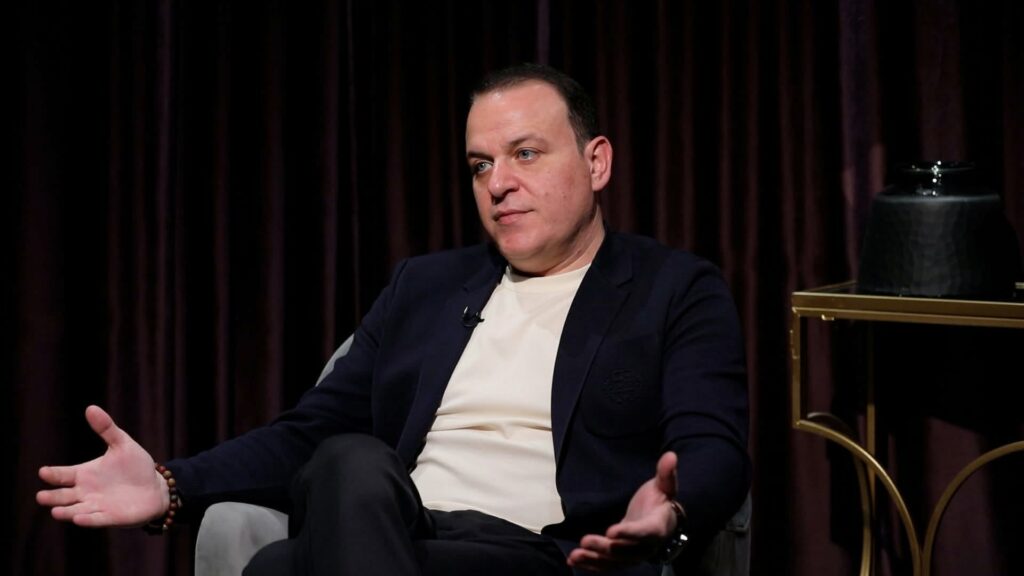
Political scientist Vladimir Martirosyan is proposing more than another opposition coalition. He envisions a new model of political organization in Armenia, built around national sovereignty, dignified peace, national identity and democratic freedoms.
He proposes transforming the declaration’s four points into an independent and recognizable public agenda under the name “The four prioritie”:
- National sovereignty: rejecting the imposition of a new Constitution at Azerbaijan’s demand.
- Dignified peace: without unilateral concessions or territorial losses.
- National identity: protecting national identity and the Armenian Apostolic Church.
- Democratic freedoms: restoring civil rights and democratic freedoms.
According to Martirosyan, these priorities could form a political bloc opposed to Nikol Pashinyan’s policies. However, simply bringing opposition parties or leaders together would not be enough.
The public must become an active participant in the process, regardless of party affiliation or attitudes toward political leaders. Citizens should be offered substantive proposals addressing the country’s problems, social coexistence, and the future of the state.
The author recalls that previous opposition movements contributed to increased political participation and public awareness. According to his figures, votes cast for non-governmental forces rose from approximately 371,000 in 2018 to 590,000 in 2021 and around 730,000 in 2026. He views this as evidence of growing electoral potential that has yet to become an organized political force.
Martirosyan proposes changing the methodology of political work:
- Mobilizing society around shared priorities rather than parties or leaders.
- Providing citizens, professional communities, regional communities, and diaspora organizations with concrete opportunities to participate.
- Establishing professional, community-based, and organizational networks.
- Creating a permanent, transparent, two-way communication system.
- Making citizens participants in political decision-making, not merely its executors.
The author argues that a political bloc is not simply a list of people, but an organized social capacity built around common priorities.
“The Four Priorities” should become not the name of another movement or party alliance, but the foundation for public recruitment, organization, and political accountability.
Martirosyan proposes a fundamental change in the approach to forming a political alternative to Nikol Pashinyan. Unity within the opposition should not be a precondition for political activity, but rather its outcome. In other words, it is first necessary to draw up a common political programme, rally society around it and establish effective mechanisms for citizen participation; only then should political unity be sought.
The aim is to propose an alternative to Nikol Pashinyan based on clearly defined principles, genuine public participation and a shared vision for the future of the Armenian state.
Thus, this is more a proposal for a political strategy than an announcement regarding the formation of a new coalition. The author’s main message is that a political alternative must be formed before, rather than after, a change of government.
Main source: yerkir.am