




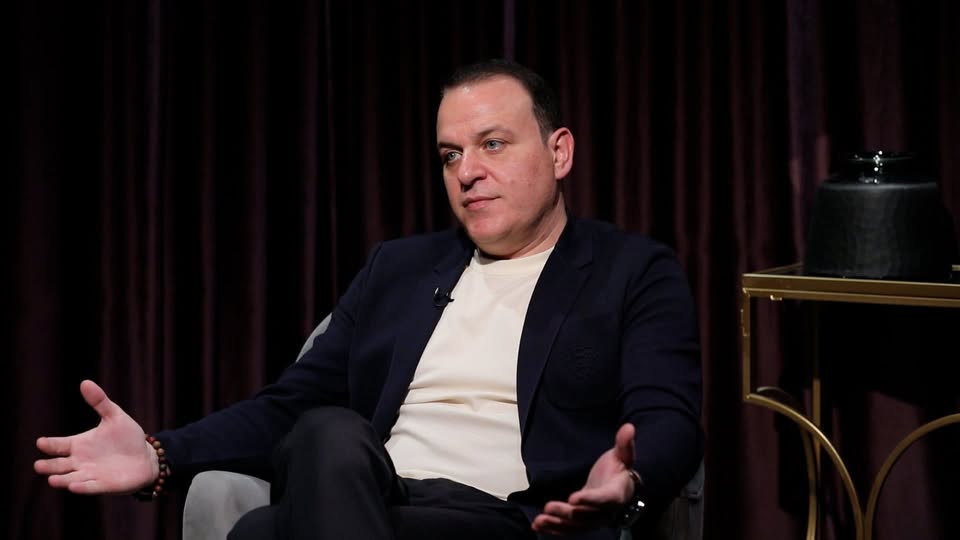
Political scientist Vladimir Martirosyan writes on Facebook that if Nikol Pashinyan refuses to revise his concept of “peace,” the unresolved problems of his policy could, in his view, be paid for by Armenian society through more limited freedoms, more controlled public discourse and narrower political choices.
Martirosyan presents recent developments as evidence of contradictions between Armenia’s foreign policy and its domestic political environment. He argues that Azerbaijan and Turkey continue their military preparations while public dialogue can be postponed or suspended.
He also questions the decision to move away from the principle of “mechanical reciprocity,” arguing that the authorities should clarify what Armenia receives in return for unilateral steps or concessions, what commitments Azerbaijan undertakes, and where the limits of Armenia’s adaptation lie.
The political scientist also discusses Tigranashen, Lake Sevan and references to “Gökçe,” presenting them as examples of what he considers an asymmetry between Armenian and Azerbaijani positions.
Martirosyan further addresses Pashinyan’s September 17 statement concerning schools and ideas contrary to the ideology of “Real Armenia.” He characterizes this as ideological pressure and warns of a possible restriction of political criticism.
Main source: facebook.com