




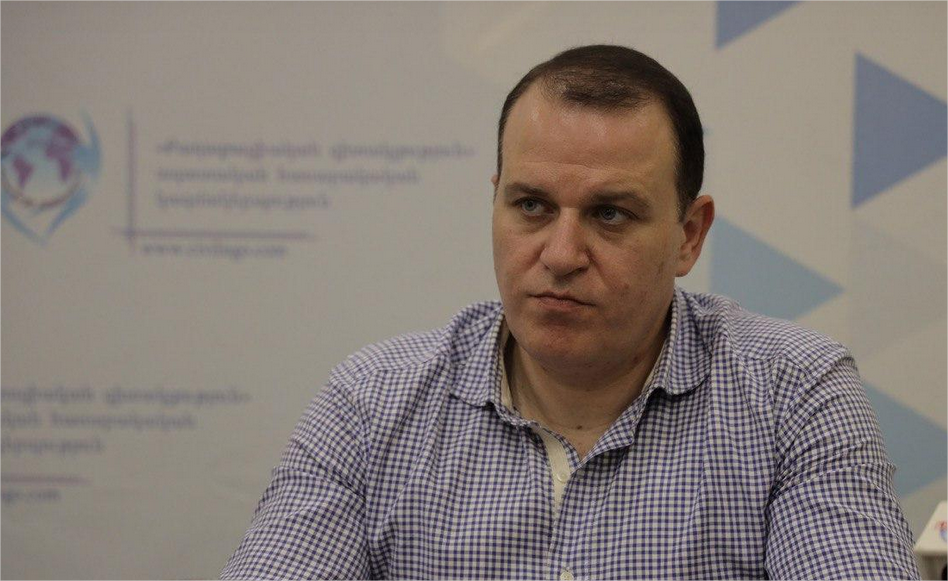
“This is how fascism, Nazism and communism came into being. From moderate authoritarianism to brutal totalitarianism, and all in the name of the people,” writes political scientist Vladimir Martirosyan on his Facebook page.
“No regime in history has ever begun with tanks, camps or a closed dictatorship.
They all began with a small, seemingly insignificant step, when the state started deciding what people were allowed to think and say, and which topics were taboo.
When the government begins to define the scope of permitted and forbidden ideas according to its own interests, it is precisely at that moment that the dangerous political phenomenon emerges which history later termed fascism. The Armenian Prime Minister’s statements in recent days do not reflect individual political positions, but a profound shift in the state’s thinking.”
He stated that
- There should be no reference to the Declaration of Independence of Armenia in the new Constitution, because it is “based on the logic of conflict”.
- He publicly admitted that he “asked” the director of the Armenian Genocide Museum-Institute to resign after the latter presented the US Vice President with a book about Artsakh, which the Prime Minister assessed as a “provocative step”.
These two statements may seem different, but in reality they are built on the same political logic. It is about reinterpreting the foundations of the state.
If the founding document of the state is presented as a source of conflict, then this actually suggests abandoning the political and historical foundations on which the independent statehood of Armenia was built.
The Declaration of Independence of Armenia is not just a historical text. It is a fundamental document of state identity, which defines the ideological and value foundations of the statehood of Armenia. The idea of abandoning that document actually means not a technical constitutional change, but a reshaping of the state’s identity, as its direct beneficiary and political dictator Azerbaijan have repeatedly stated.
However, the second statement made at the same press conference is more noteworthy. When the country’s prime minister publicly says that the director of the Armenian Genocide Museum resigned at his “request”, not only a political but also an institutional problem arises here. The point is that the museum-institute is not a state body, but a structure with the status of a foundation, the director of which is not a state official subordinate to the prime minister. This means that the given official is not under the direct administrative subordination of the government.
An important question arises from this:
How is it possible for the prime minister to publicly declare that a person who is not legally subordinate to him is resigning at his request or demand? There are thousands of such people in our country.
From a political science perspective, this is no longer institutional governance, but an expansion of the will of the government beyond the boundaries of state institutions. This phenomenon is described in political theory as voluntaristic government, when decisions are based not on institutional authority, but on the subjective political will of the government, the administrative dictate.
However, the ideological chain that is formed in the logic of these statements is more dangerous.
- If it is said that the topic or idea of Artsakh is built on the “logic of conflict”, then it follows that talking about Artsakh or maintaining that idea in public discourse is seen as a factor in continuing the conflict, and an Artsakh citizen who has a desire and demand for the restoration of his natural rights are a conflict instigator.
The next step logically follows from here.
- If the idea of Artsakh is identified with war, then the bearers of that idea and those who voice it will be presented as bearers and instigators of the logic of war.
This is where the third link arises.
- If any person or public actor or even a public stratum is presented as a bearer of the logic of war, then he or she can be viewed as a potential threat to national security. And objects that pose a threat to national security are viewed as subject to control, isolation and restriction by the logic of the state security systems.
At this point, the ideological chain reaches a very dangerous conclusion.
- The idea begins to be criminalised, and the bearers of the idea can be presented as a security challenge and not only be deprived of their position but also excluded from the public environment and isolated.
And what happened to the director of the Armenian Genocide Museum-Institute is a practical and initial manifestation of this logic. When the director of the museum-institute presents a book about Artsakh to the US Vice President, and after that the country’s prime minister declares that it is a provocation, this is where the application of this ideological mechanism takes place.
That is, the action is assessed not as a scientific, cultural or academic step, but as politically unacceptable behaviour.
That is, the problem is no longer the book.
The problem is that certain topics begin to be viewed as permissible or prohibited ideas and actions.
From a political science perspective, this is reminiscent of political models where the state begins to divide society not into citizens, but into ideologically permissible and ideologically unacceptable groups.
When the ideological policy of the state reaches the level that raising certain national topics can be viewed as a “provocation” or a “national security issue”, at that moment the dangerous prerequisites are formed, which history has repeatedly described as the initial stage of ideological fascism.
In this model, it is not only the use of force that is dangerous, but above all the control over thought and ideas. Because from that moment on, society is divided not into political positions, but into permissible and innumerable.
The problem, therefore, does not lie in a single statement, resignation or isolated political incident. The problem is that this line of thinking, if not stopped in time, inevitably leads down the same path taken by many societies.
This path is clearly evident throughout history.
This is how fascism came into being.
Main source: antifake.am